What Is a Bitcoin Wallet? Best Wallets for Safe Storage
A Bitcoin wallet is a digital tool that allows you to store, send, and receive Bitcoin securely. Despite the name, a wallet does not actually store your Bitcoin in the way a physical wallet stores cash. Instead, it stores your private keys. Private keys are secret cryptographic codes that give you access to your Bitcoin on the blockchain. If you control the private keys, you control the Bitcoin.
To understand this clearly, Bitcoin exists on the blockchain, which is a public digital ledger. Your wallet interacts with the blockchain and allows you to manage your funds. When someone sends you Bitcoin, it is recorded on the blockchain under your wallet address. Your private key proves that you are the rightful owner and allows you to spend those funds.
There are two main components of a Bitcoin wallet: a public key and a private key. The public key generates your wallet address. This is the address you share with others to receive Bitcoin. The private key must always be kept secret. If someone gets access to your private key, they can transfer your Bitcoin without your permission.
There are different types of Bitcoin wallets, each with its own level of security and convenience.
Hot Wallets
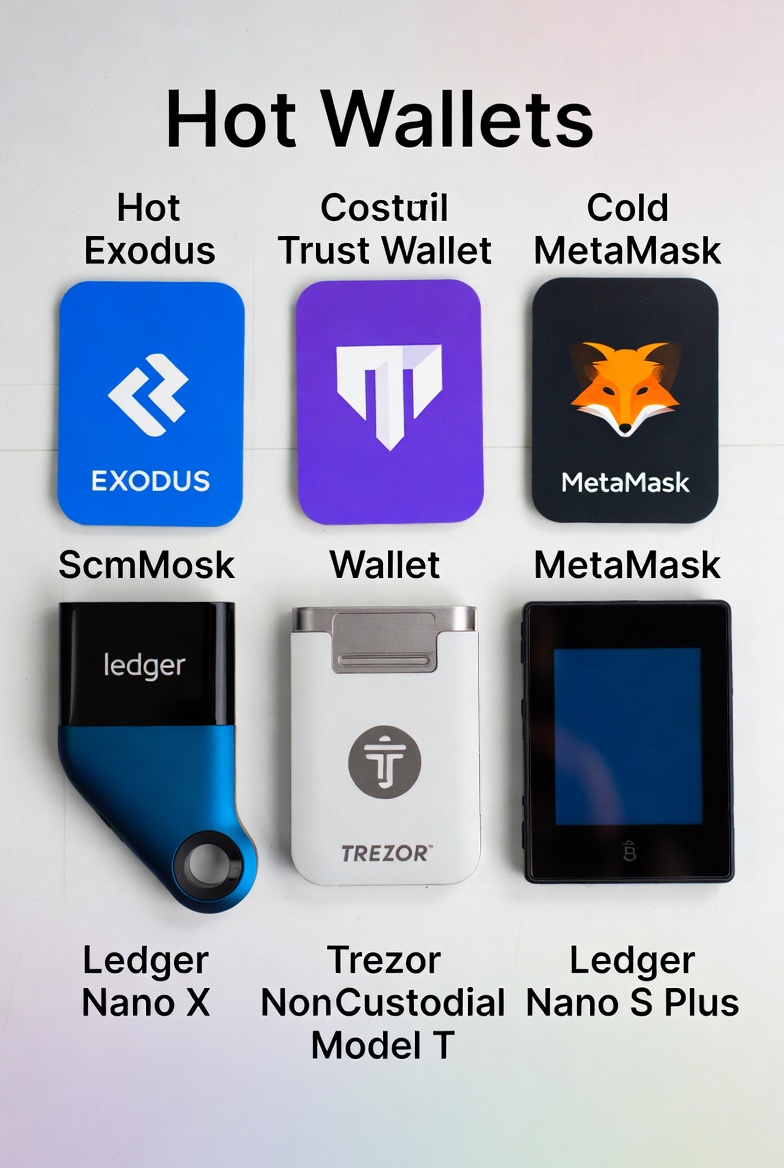
Hot wallets are connected to the internet. They are easy to use and ideal for beginners or for people who make frequent transactions. Because they are online, they are more vulnerable to hacking compared to offline wallets.
Examples of popular hot wallets include:
- Exodus – A user-friendly desktop and mobile wallet with a simple interface.
- Trust Wallet – A mobile wallet widely used for storing multiple cryptocurrencies.
- MetaMask – A browser-based wallet mainly used for Ethereum but also supports Bitcoin through integrations.
Hot wallets are suitable for small amounts of Bitcoin or daily transactions. However, for long-term storage, higher security options are recommended.
Cold Wallets
Cold wallets are offline wallets that are not connected to the internet. Because they remain offline, they are much more secure against online attacks. Cold wallets are best for long-term storage or holding large amounts of Bitcoin.
The most common type of cold wallet is a hardware wallet. Hardware wallets are physical devices that store your private keys securely.
Some of the best hardware wallets include:
- Ledger Nano X – One of the most popular hardware wallets, known for strong security and Bluetooth support.
- Trezor Model T – A secure hardware wallet with a touchscreen interface.
- Ledger Nano S Plus – A more affordable version of Ledger with high security standards.
There is also something called a paper wallet. A paper wallet is simply a printed copy of your public and private keys. While it is offline and secure from hackers, it can be lost, damaged, or stolen easily. For most users, hardware wallets are a safer option than paper wallets.
Custodial vs Non-Custodial Wallets
Another important distinction is between custodial and non-custodial wallets.
Custodial wallets are managed by third parties, such as cryptocurrency exchanges. For example, if you store Bitcoin on an exchange platform, the exchange controls the private keys. This is convenient but carries risk. If the exchange is hacked or shuts down, your funds could be at risk.
Non-custodial wallets give you full control over your private keys. This means you are fully responsible for security. If you lose your recovery phrase, you may permanently lose access to your Bitcoin. However, non-custodial wallets are generally considered safer because you control your own funds.
Recovery Phrase
Most modern wallets provide a recovery phrase, usually 12 or 24 words. This phrase allows you to restore your wallet if your device is lost or damaged. It is extremely important to write this phrase down and store it in a safe place. Never share it with anyone.
How to Choose the Best Bitcoin Wallet
The best wallet depends on your needs. If you trade frequently and need quick access, a reputable hot wallet may be suitable. If you are investing long-term and want maximum security, a hardware wallet is the better choice.
Consider these factors when choosing a wallet:
Security features such as two-factor authentication and encryption
Ease of use and user interface
Backup and recovery options
Reputation and reviews
Compatibility with your devices
Best Practice for Safe Storage
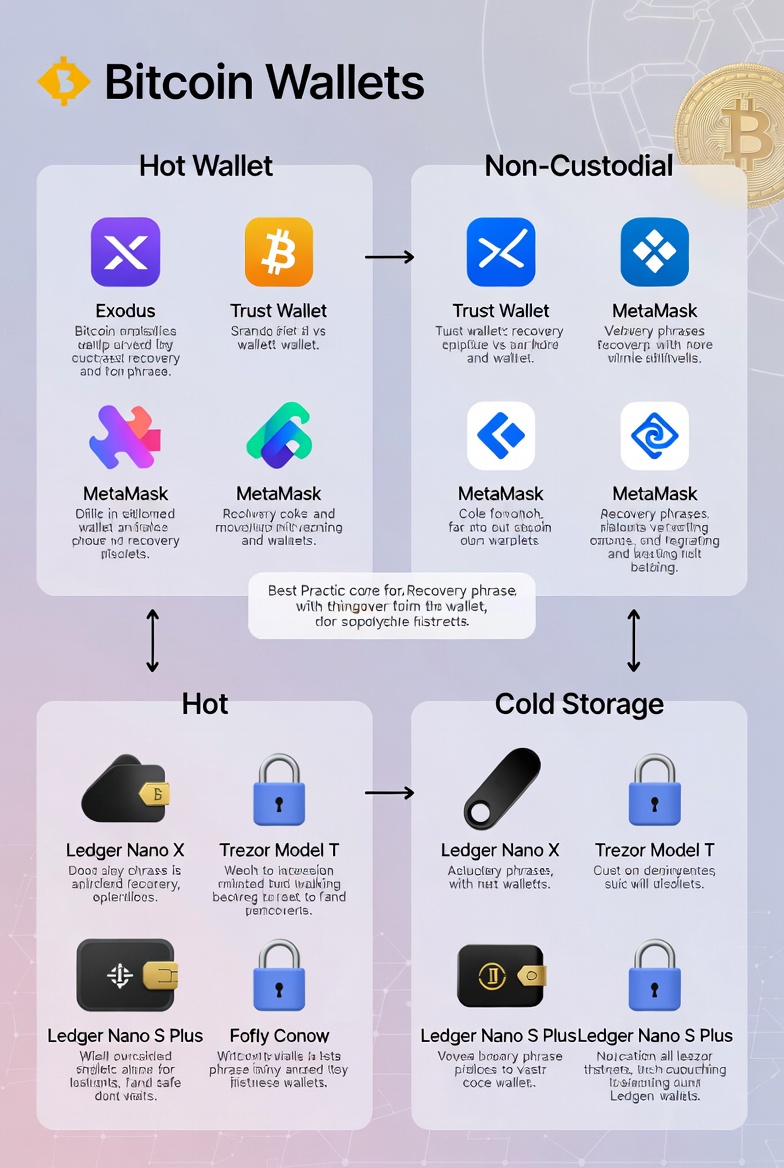
For maximum safety, many experienced investors use a combination of wallets. They keep a small amount of Bitcoin in a hot wallet for transactions and store the majority in a cold hardware wallet for long-term holding. This strategy reduces risk while maintaining convenience.
Conclusion
A Bitcoin wallet is essential for anyone who wants to store or use Bitcoin. It manages your private keys and allows you to interact with the blockchain. Hot wallets offer convenience, while cold wallets provide stronger security. For safe storage, hardware wallets like Ledger and Trezor are widely recommended. No matter which wallet you choose, protecting your private keys and recovery phrase is the most important step in securing your Bitcoin.