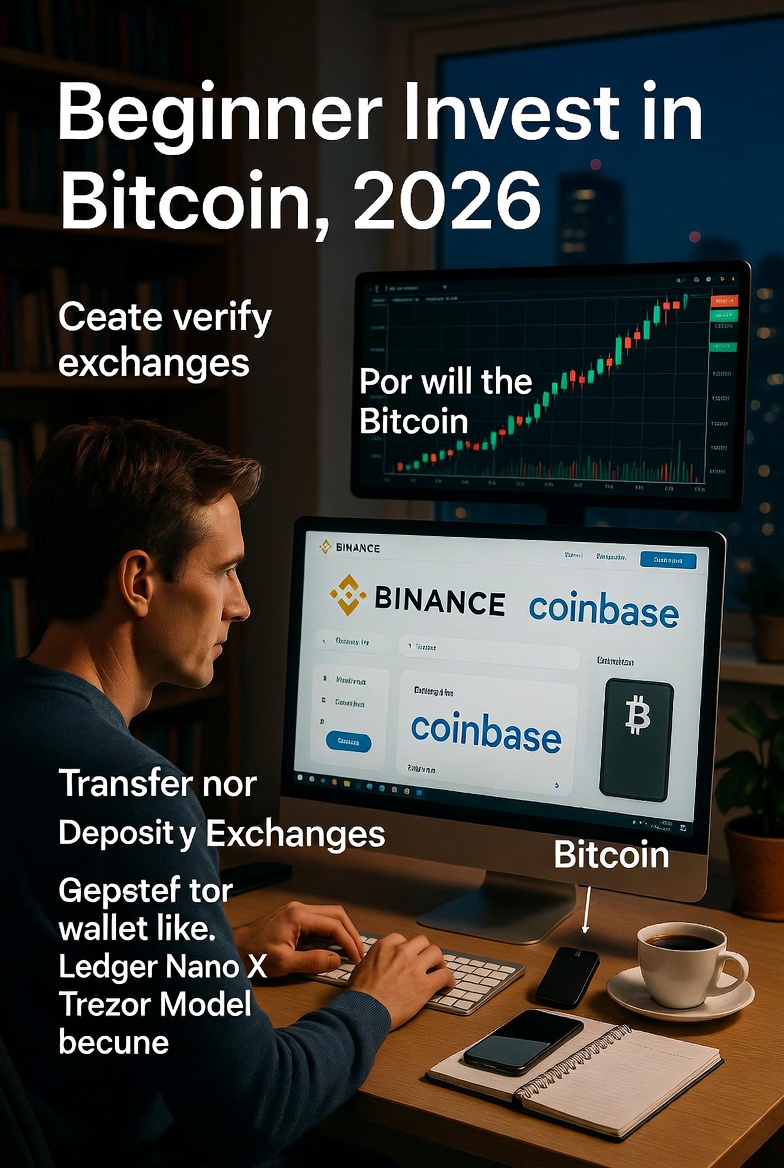
Investing in Bitcoin can seem complicated at first, but once you understand the process, it becomes much simpler. Bitcoin is a digital asset that operates on a decentralized blockchain network. It allows people to transfer value without banks or central authorities. If you are a beginner in 2026 and want to invest in Bitcoin, this guide will walk you through the entire process step by step.
Understand What Bitcoin Is
Before investing, it is important to understand what you are buying. Bitcoin is not a physical coin. It is a digital currency with a limited supply of 21 million coins. Its price is determined by market demand and supply. Bitcoin is known for high volatility, meaning its price can rise or fall quickly. As an investor, you must be prepared for price fluctuations.
Step 1: Do Your Research
Never invest without research. Learn how Bitcoin works, what blockchain technology is, and what factors influence Bitcoin’s price. These factors include market demand, global economic conditions, regulations, institutional adoption, and events like Bitcoin halving.
You should also understand the risks. Bitcoin can provide high returns, but it also carries the risk of significant losses. Only invest money you can afford to lose.
Step 2: Choose a Reliable Cryptocurrency Exchange
To buy Bitcoin, you need to use a cryptocurrency exchange. An exchange is an online platform where you can buy, sell, and trade Bitcoin.
Some well-known exchanges include:
- Binance
- Coinbase
- Kraken
When choosing an exchange, consider security, fees, ease of use, payment methods, and reputation. Make sure the exchange operates legally in your country.
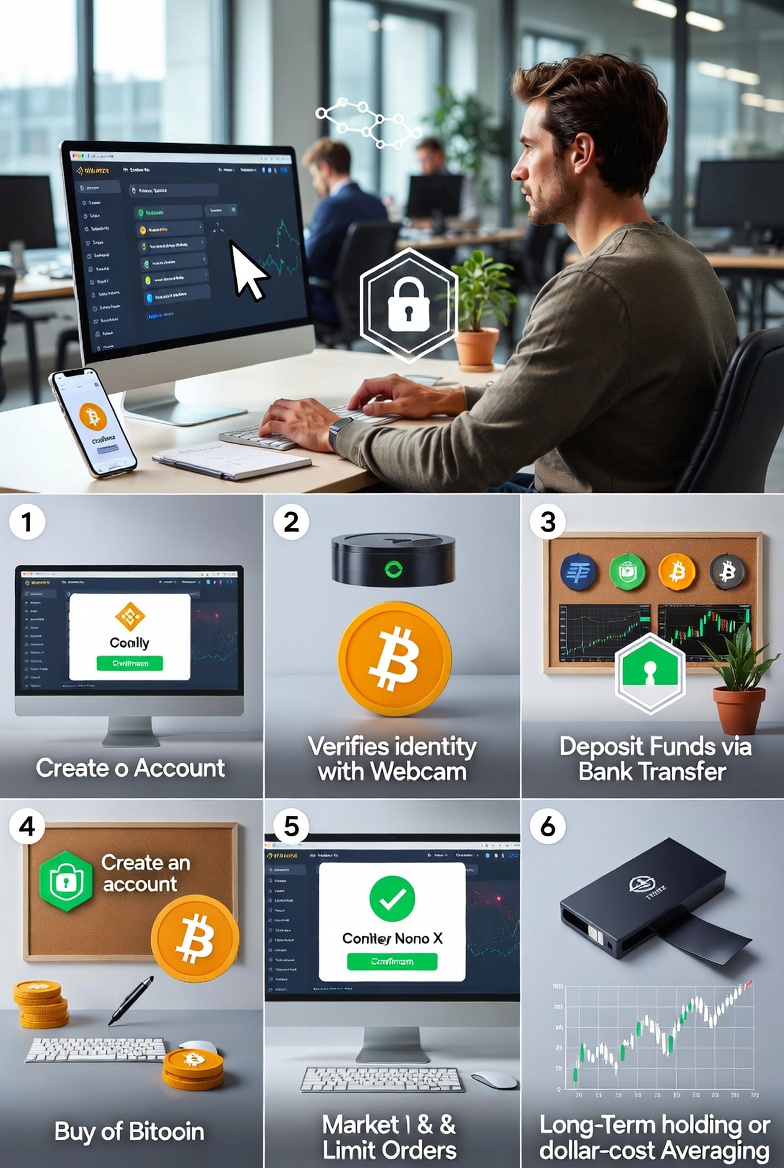
Step 3: Create and Verify Your Account
After selecting an exchange, you need to create an account. This usually requires providing your email address, setting a password, and completing identity verification. Most regulated exchanges require Know Your Customer verification, where you upload identification documents.
Enable two-factor authentication for extra security. This adds an additional layer of protection to your account.
Step 4: Deposit Funds
Once your account is verified, you can deposit money. Most exchanges allow deposits through bank transfer, debit card, or credit card. Some platforms also support third-party payment services.
Be aware of transaction fees and processing times. Bank transfers often have lower fees compared to card payments.
Step 5: Buy Bitcoin
After depositing funds, you can place an order to buy Bitcoin. There are two main types of orders:
Market Order: This buys Bitcoin immediately at the current market price. It is simple and suitable for beginners.
Limit Order: This allows you to set a specific price at which you want to buy Bitcoin. The order executes only if the market reaches your chosen price.
For beginners, a market order is usually the easiest option.
Step 6: Store Your Bitcoin Safely
After purchasing Bitcoin, you must decide where to store it. You can leave it on the exchange, but this is not recommended for long-term storage.
For better security, use a personal wallet. There are two main types:
Hot Wallets are connected to the internet and are convenient for frequent transactions.
Cold Wallets, such as hardware wallets, store your private keys offline and provide higher security.
Popular hardware wallets include:
- Ledger Nano X
- Trezor Model T
For long-term investors, a hardware wallet is generally the safest option.
Step 7: Choose an Investment Strategy
There are different strategies for investing in Bitcoin:
Long-Term Holding: Also known as holding, this strategy involves buying Bitcoin and keeping it for several years, expecting long-term price growth.
Dollar-Cost Averaging: This involves investing a fixed amount of money regularly, such as weekly or monthly. It reduces the impact of price volatility.
Short-Term Trading: This strategy involves buying and selling Bitcoin frequently to take advantage of price movements. It requires experience and technical analysis skills.
Beginners often prefer long-term holding or dollar-cost averaging because they are simpler and less stressful.
Risk Management
Never invest all your money in one asset. Diversification is important. You can allocate a small percentage of your portfolio to Bitcoin while keeping other investments in stocks, bonds, or other assets.
Also, avoid emotional decisions. Bitcoin’s price can be highly volatile. Panic selling during price drops or buying during extreme hype can lead to losses.
Tax Considerations
In many countries, Bitcoin investments are subject to taxes. Profits from selling Bitcoin may be taxed as capital gains. Make sure you understand the tax regulations in your country and keep records of your transactions.
Common Mistakes to Avoid
Do not share your private keys or recovery phrase with anyone.
Avoid investing based on rumors or social media hype.
Do not use unregulated or suspicious platforms.
Do not invest money you need for daily expenses.
Conclusion
Investing in Bitcoin in 2026 is easier than ever, but it requires knowledge and careful planning. Start by researching, choose a trusted exchange, secure your investment with a reliable wallet, and follow a clear strategy. Bitcoin offers strong growth potential, but it also carries risk. By investing responsibly and managing risk properly, beginners can participate in the cryptocurrency market with greater confidence.